The Lexington Climate Action Network (formerly the Lexington Global Warming Action Coalition, or LexGWAC) is a nonprofit organization dedicated to advancing effective community responses to climate change.
Since 2005, LexCAN has worked to educate, engage, and empower residents to take meaningful climate action. Through education, advocacy, partnerships, and community initiatives, we help individuals and communities reduce greenhouse gas emissions, build resilience, and create a healthier, more sustainable future.
In 2021, LexCAN updated its mission and vision to reflect the growing urgency of the climate crisis, broaden its focus beyond global warming alone, and emphasize collaboration as essential to achieving lasting climate solutions.
Our Founding
LexCAN was founded in 2005 by Lexington residents inspired by the town-wide Lexington Reads discussion of E.O. Wilson’s The Future of Life. The book highlighted both the environmental challenges facing our planet and the opportunity for people to work together to create solutions.
Motivated by that vision, LexCAN’s founders created an organization where residents could learn about climate change, share ideas, and take action together. That combination of scientific understanding and practical solutions continues to guide LexCAN’s work today.
Growing Our Impact
LexCAN first became known for bringing nationally recognized scientists, authors, and environmental leaders to Lexington to educate the community about climate change. Over time, the organization expanded its focus to helping residents take practical action through programs on energy efficiency, heat pumps, solar energy, composting, recycling, sustainable landscaping, and electric vehicles.
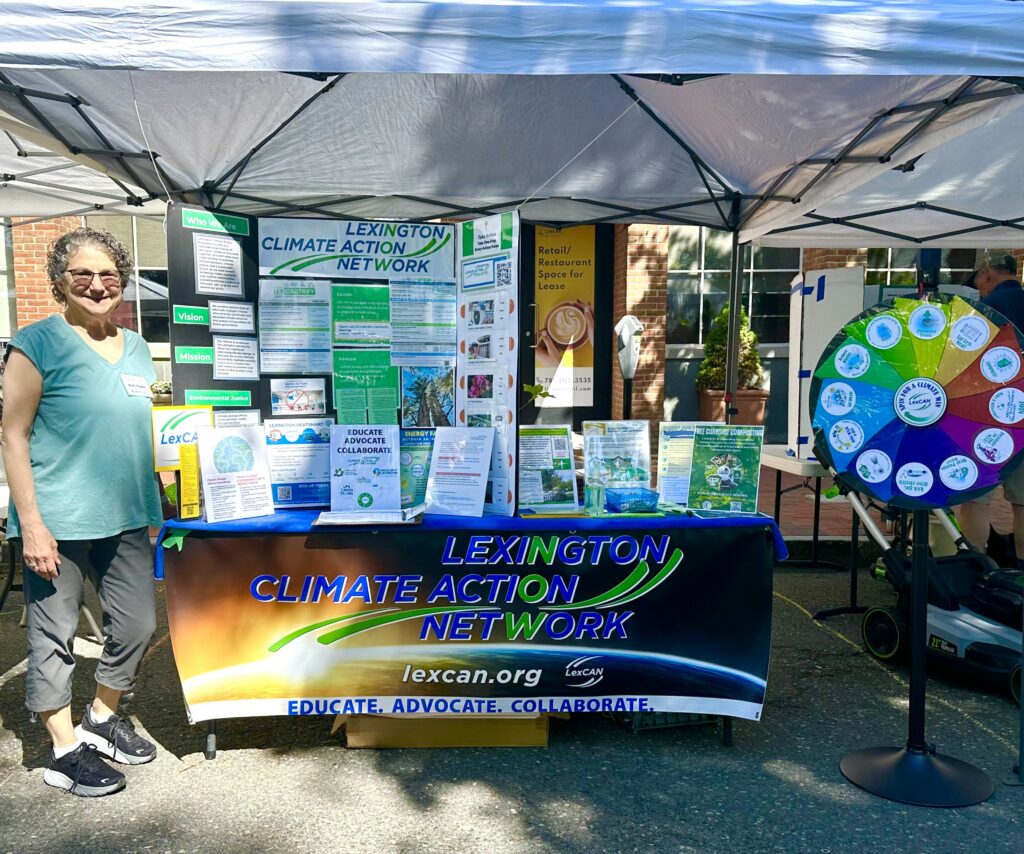
As climate change became increasingly urgent, LexCAN broadened its work beyond individual action to include advocacy for local and state climate policies. The organization partners with community groups, supports public awareness campaigns, and encourages civic engagement to advance climate solutions.
LexCAN has also helped strengthen climate collaboration across Massachusetts. In 2012, it launched Sustainable Middlesex, a network of more than 30 grassroots climate organizations that share resources, coordinate initiatives, and host the annual Carbon Countdown conference. In 2020, LexCAN created the Lexington Green Network to connect local environmental organizations and encourage collaboration within Lexington.
Climate Progress in Lexington
2013
Lexington adopted Warrant Article 33, committing the Town to incorporate climate change into planning, reduce greenhouse gas emissions, and develop a comprehensive climate action plan.
2016
Lexington launched Community Choice, automatically enrolling residents in 100% renewable electricity unless they opt out.
2018
The Select Board established a goal of achieving net-zero emissions by 2043, and Lexington adopted its Sustainable Action Plan to guide climate mitigation and resilience efforts.
2019
Lexington adopted green building standards for municipal buildings to improve sustainability and public health.
2020
Town Meeting created the Sustainability Director position. Lexington declared a Climate Emergency. Fossil fuel restrictions were approved for certain new commercial buildings. LexZeroWaste was founded.
2021
LexCAN and its partners successfully advocated for the Clean Heat for Lexington initiative, along with additional zoning changes that encouraged cleaner building standards and expanded opportunities for solar energy installations.
2022
The Town adopted a new Comprehensive Plan centered on resilience and sustainability, launched the HeatSmart Lexington program, and approved a Building Energy Use Disclosure Bylaw to improve energy transparency.
2023
Lexington adopted the Specialized Stretch Energy Code, joined the Municipal Fossil Fuel Free Building Demonstration Program, and approved a High-Performance Buildings Policy. LexCAN also launched the LexElectrify campaign to help residents transition to clean energy.
2024
The Town strengthened protections for mature trees, completed its Decarbonization Roadmap, and approved a phased ban on the sale of single-use plastic water bottles.