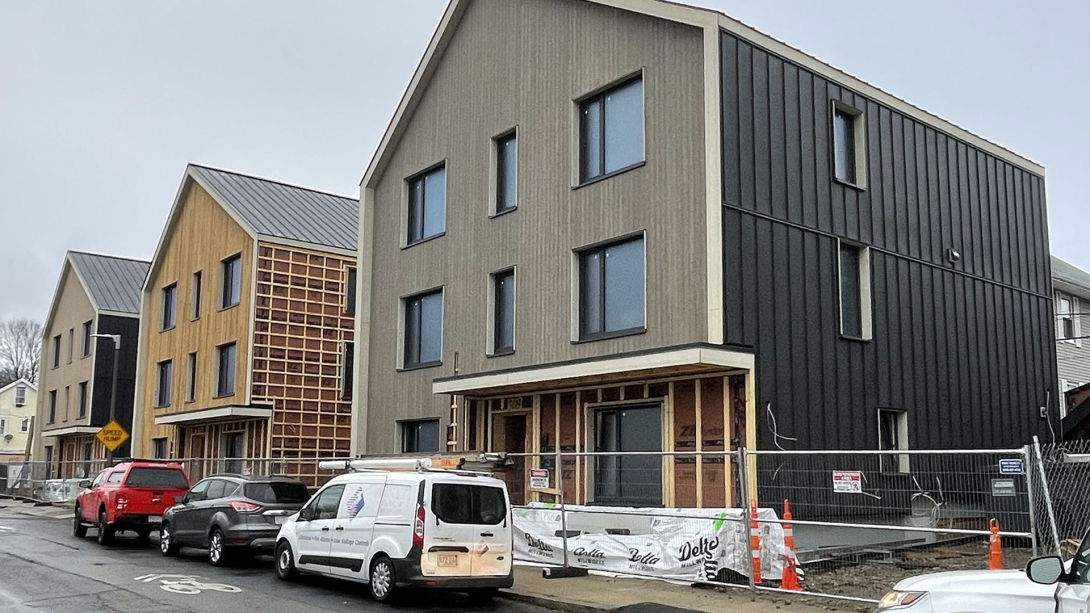
Join NESEA for a Pro Tour that demonstrates, at real scale, how high-performance building strategies can directly support both climate goals and housing affordability. We will be touring and learning about a new development in Dorchester that delivers twelve affordable homeownership units across four 4-unit Passive House buildings, the first of their kind in the neighborhood. Among other building science topics, the project team will teach attendees about the off-site panelizing approach that made this project possible. This project shows how thoughtful design, rigorous performance standards, and repeatable construction methods can produce healthier, lower-energy homes without sacrificing cost control or delivery timelines.
We will also be capitalizing on the opportunity of the day to introduce attendees to members of NESEA’s BuildingEnergy Access program, designed to provide business support and connection to women and BIPOC-owned businesses. After check-in and a chance for refreshments and networking, our program will kick-off with mini-presentations from program participants.
After these introductions, we’ll segue into learning about our day’s tour site with a presentation including the design strategies, materials selection, performance goals, and community aspects of the project. Attendees will then break into small groups to tour the facility while hearing more from the interdisciplinary team of experts who made the building possible. After the tour, we’ll regroup for a reception and Q&A, giving attendees the opportunity to chat with the day’s speakers and each other.
More About the Project
The project illustrates a scalable model for the region. By leveraging an off-site, panelized construction process, the architects (HUE Architecture), contractors (Star Contracting Company), and the development team (Dorchester Design Collaborative) maintained tight coordination from early design through on-site raising, enabling consistent quality, predictable schedules, and budget discipline. The project also highlights the role of effective public-private partnerships in advancing high-impact work: it is part of the first phase of the City of Boston’s Welcome Home Boston RFP program and is financed through a combination of a construction loan from Massachusetts Housing Investment Corporation, City of Boston support, and MassHousing’s Commonwealth Builder program. Together, these elements make the project a strong case study for professionals interested in replicable, high-performance multifamily housing solutions across the Northeast and beyond.