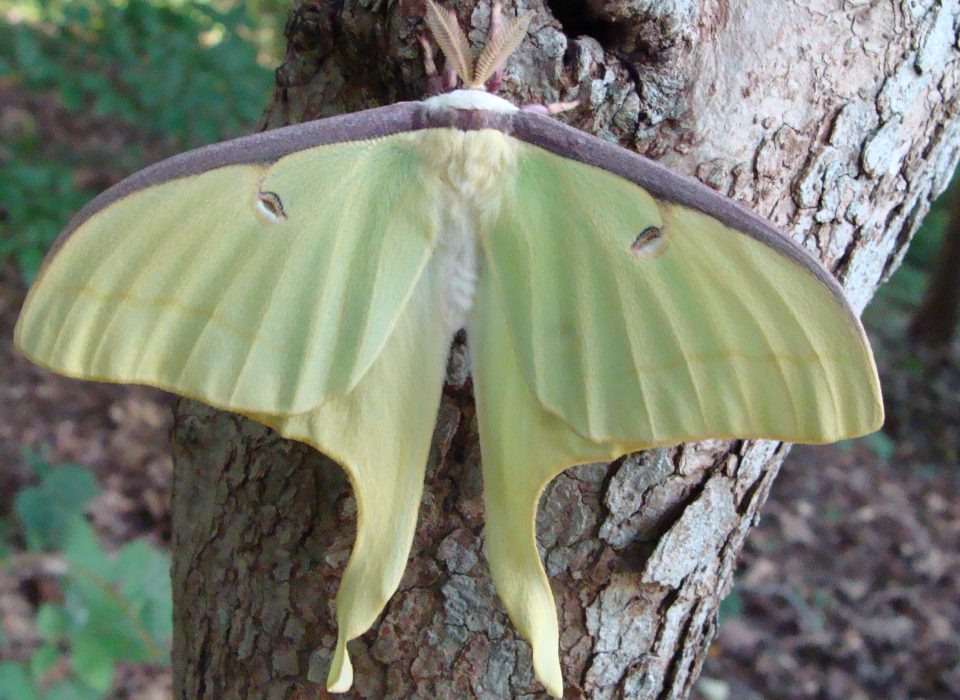
Our enchantment with butterflies isn’t surprising. These daytime flyers are easily observed and collectively encompass a rainbow palette of colors punctuated with ornate patterns. However, their close relatives the moths overwhelm butterflies in species diversity and sheer numbers. Most moths are nocturnal and largely out of sight and mind. Nonetheless, they are one of the most important animal groups. Moths are inextricably intertwined with native plants, bats, birds, and the whole of the eastern deciduous forest ecosystem. They play an enormous role in the pollination of native plants and over the eons have spurred the evolution of myriad defensive plant compounds to ward off caterpillar herbivory. In addition, they are often far more interesting than butterflies, both visually and behaviorally. This talk will be a pictorial journey into an intriguing and little known world that unfolds all around us. We can greatly benefit the ecosystem around us by “moth-gardening” in our yards. This program is loosely based on the recent book Gardening for Moths, by McCormac and coauthor Chelsea Gottfried (Ohio University Press). Take part in our flexible online learning offerings.
Join live to participate in our online learning community or watch after as your schedule allows. All registrants will receive a recording of the class with access to view the class for 30 days after the live session.